
Historical research is akin to traveling. In fact, one might say that when you research history of any kind, you ARE making a journey. Back in time, to another place or set of circumstances. During the past year, I have been fortunate to travel, both nationally and internationally. As a historian and archivist, I always make it a point to visit libraries, history museums, and archives wherever I go. They are all places of learning, gathering, and exploring, and although tourists (and even residents) rarely visit archives, I love to do research anywhere and everywhere.
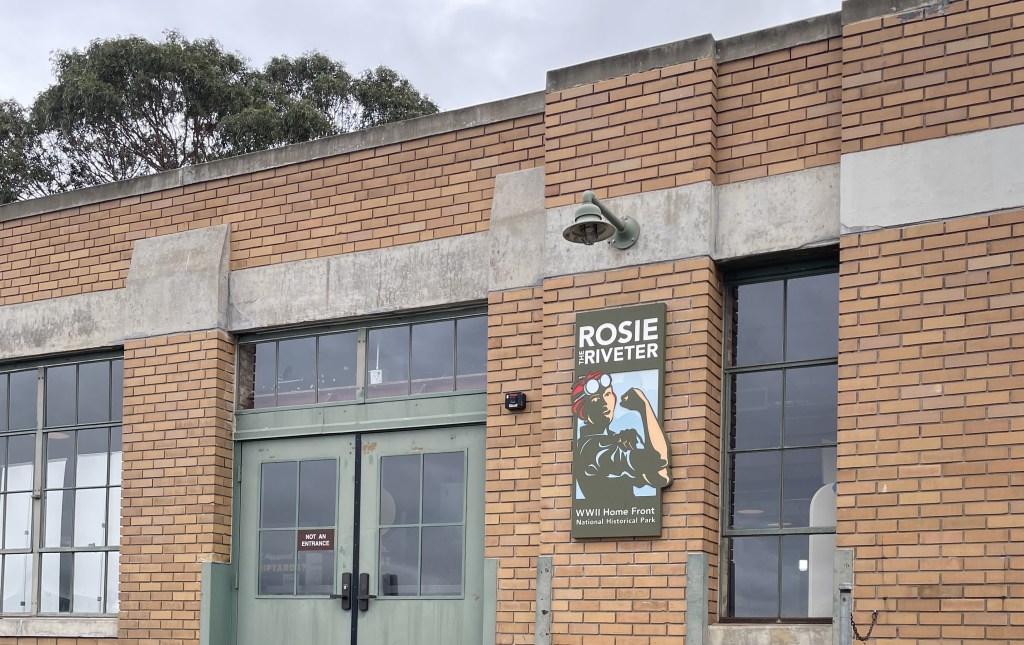
Two of my trips this year – to Montreal and Marin County, California – resulted in visits to libraries and historical organizations. While I was unable to do archival research, I did have the opportunity to study how historical organizations told their stories through their exhibits. The Rosie the Riveter/World War II Home Front National Historical Park in Richmond, CA was a spontaneous side trip and a pleasant surprise. Situated on Richmond Marina Bay, the visitor center told not only the story of women in industrial jobs during the war, but also the story of diverse groups of people who were discriminated against during World War II – the Japanese, Italians, African Americans, and the LGBTQ community, and how war affected the children of Richmond.
In Montreal, I was fascinated by an exhibit called Ruovttu Guvli/Towards Home at the Centre for Canadian Architecture. This was an “Indigenous-led exhibition and publication project” that explored the connections between Arctic peoples, their relationship to land and water, and what this means in terms of home and shelter. New installations illustrated how Arctic communities are designing and reimagining architecture that draws from the past while looking forward.
My archival research this past year ranged from a local county archives in Middle Tennessee to the Archivio di Stato di Bologna in Imola, Italy. These two archives were polar opposites in nearly every way, though both were staffed by incredibly helpful, knowledgeable archivists. The Maury County Archives in Tennessee is housed in a temporary location while a larger facility is being built whereas the archives in Imola is in a historic building that also houses the city’s library. In Tennessee, I was able to walk in, and using indexes and inventories, I researched a parcel of land records on microfilm. As a result, I learned about a group of Scots Irish settlers who moved to the area from South Carolina in 1807, purchased five thousand acres of land, and established the Zion community.
In Italy, I had a totally different experience. The archives houses documents from the Middle Ages to the present. Prior to my visit, I had to choose a research subject so that the archivists could pull materials in advance of my appointment. Even though we had a language barrier, we found ways to communicate. I was able to hold documents from the 17th century in my hands! Nothing was on microfilm. Talk about traveling back in time – archivist heaven! I have yet to sort out all of the information I gathered (and translate it) but will be writing a blog post in the future about my research there on child relinquishment/adoption.
Visiting new places, near or far, can be rewarding in so many ways – from cultural differences, varied landscapes and architecture to the rich resources in archives, libraries, and museums that can transport us back in time. Travel. Research. Learn.
 historicaresearch.com