
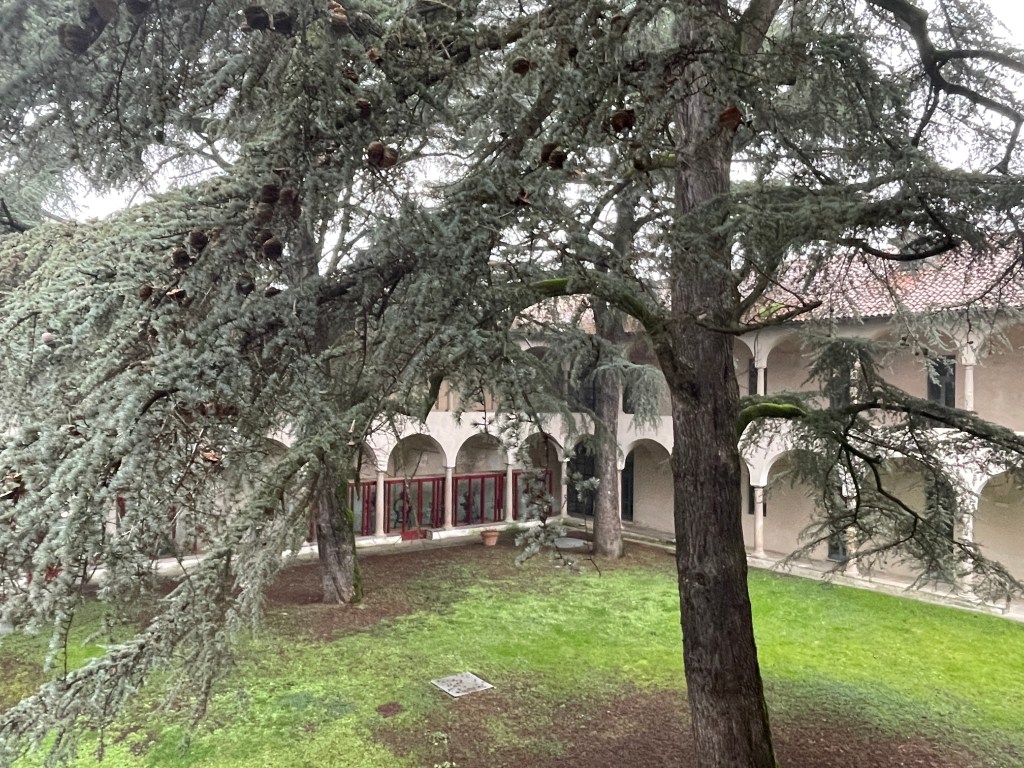
The comune of Vigevano is located in the province of Pavia in the Lombard region of Italy. I was surprised at how flat the landscape was – an agricultural area of rice fields and farmland with the backdrop of snow-capped mountains to the north near Milano. If you know me at all by now, you know that I visit archives and libraries where ever I go. So, I spent much of my daily time in the Archivio di Stato del Comune di Vigevano (Vigevano’s Municipal Historical Archives) in Palazzo Merula. Constructed in the early 17th century, the building was originally a cloistered convent for Dominican nuns; throughout the 19th and mid-20th centuries, it served as an orphanage and asylum. Eventually, the municipal administration acquired the property and restored the building which now serves as a home to various cultural institutions, including the archives.
But what to research here? Since I do not have family in northern Italy, I continued research I began in 2023 in Imola (near Bologna) on foundlings (infants who were abandoned) and discovered new types of records documenting where infants were found and how they were cared for. The “orphanage system” of record keeping in Vigevano, while similar, was also quite different from that of Imola. Of course, this could be because I still am not well versed in what to ask for! To set a framework for myself, I chose the year 1871 as a starting point – a year I had researched in Imola. Perhaps I could undertake a comparison?
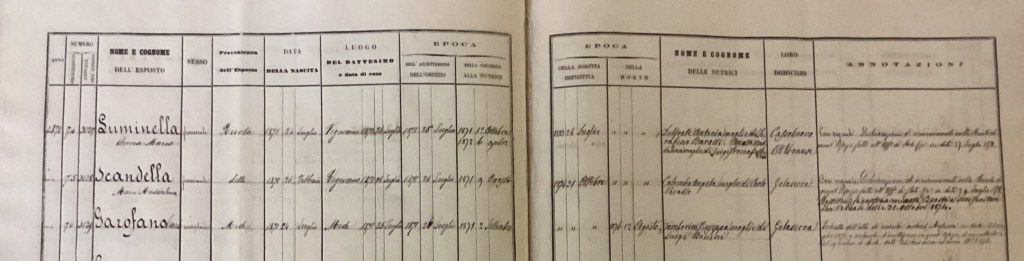
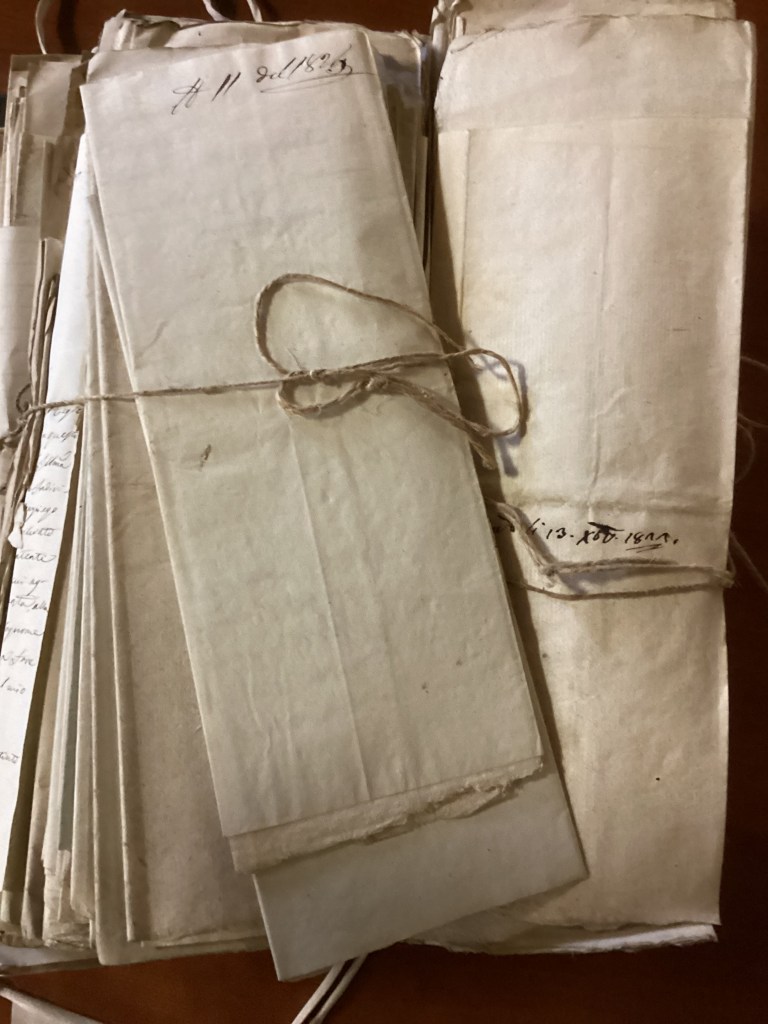
In Vigevano, I was presented with registers to examine (which I had not seen in Imola) – large ledger books that recorded data on each infant (intake dates, date of birth, name, etc.) as well as “nutrice” (wet nurse) registers. Both sets of registers were fascinating and contained many details on the life of each infant. To complement these, I also examined packets of files – one for each child – organized by year and the registration number listed in the register. These, too, were a wealth of information and can be used in combination with civil and parish records to flesh out a child’s story.
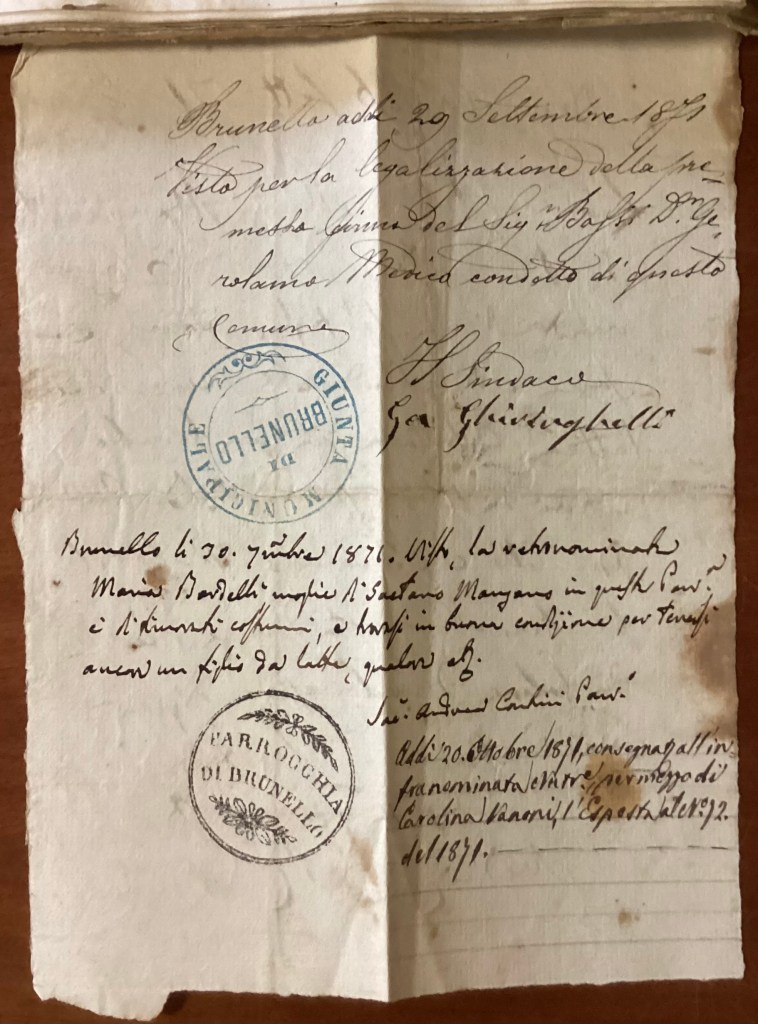
One thing to keep in mind is that a foundling was an infant who was left anonymously – usually at a church, hospital, or orphanage – often in a “ruota” (foundling wheel). Other infants, usually delivered by a midwife who reported the birth, could have been illegitimate with “padre incerto” (unknown father) noted on the birth record. In some cases, even though the midwife most certainly knew the mother, the records may state “una donna che non consente di essere nominata” (a woman who does not consent to be named). And, less frequently, some of these parents later came forward to acknowledge the baby as theirs.
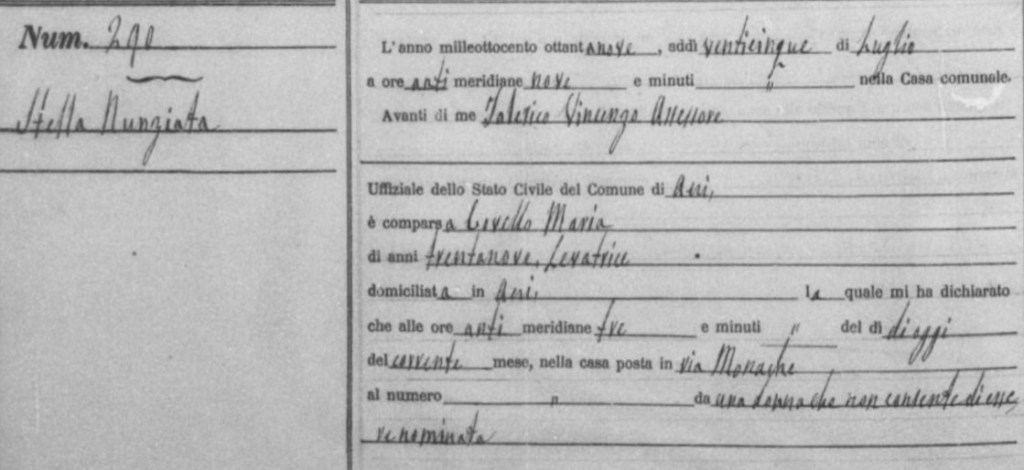
While I have not yet fully examined all that I found in my latest trip, I can say that it has piqued my curiosity further. I want to know how cities and towns in the south of Italy, in Calabria in particular, cared for their foundlings. What 19th century records exist in these southern towns and cities? Although it may be complicated and time consuming, it is definitely possible to trace an ancestor who was a foundling. Or you may discover a father who later came forward to acknowledge his child. If you do hit a “brick wall” in terms of determining parentage, you can certianly flesh out details of the child’s life by researching various records. And, if you choose, in this day and age, DNA might help you get even further.
Note: there are many essays written about foundlings in Italy, the ruota, and the hospital/orphanage systems. I hope to flesh out some stories of individual children soon.
 historicaresearch.com