Every time I travel, I visit libraries and archives, not museums that often, though there are those visits as well. The written word, the ink on the page, the lives documented on parchment, vellum, in illuminated manuscripts, even government records – these fuel and inspire me.
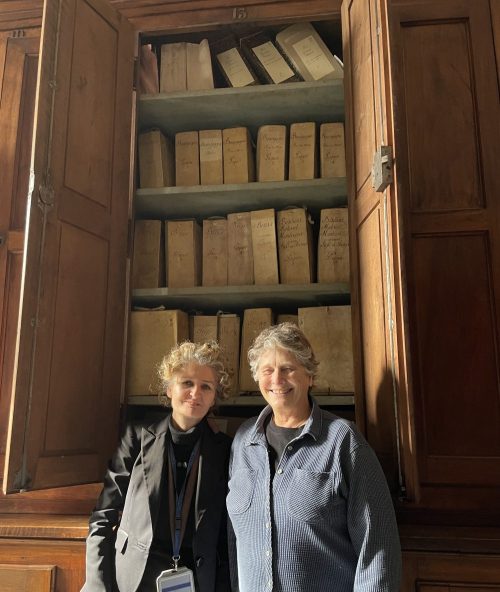
On my most recent trip to Italy, I went on an overnight visit to Torino with my daughter. She navigated our walking journey through the city and we stumbled upon the Archivio di Stato di Torino (on our way to the chocolate festival!) located in the Palazzo degli Archivi at the northern edge of Piazza Castello. The building is a five-stories designed in the 18th century specifically to house the archives of the House of Savoy. We took a chance and walked in the door and even though we did not have an appointment (and were not there to do research), we received a short tour from a friendly archivist named Alba. She was only able to show us a couple of rooms on the second floor. Be still my beating heart! Wooden cabinets, floor to ceiling, were chock full of centuries of documents. My archivist brain was racing thinking of the hours I could spend researching there!
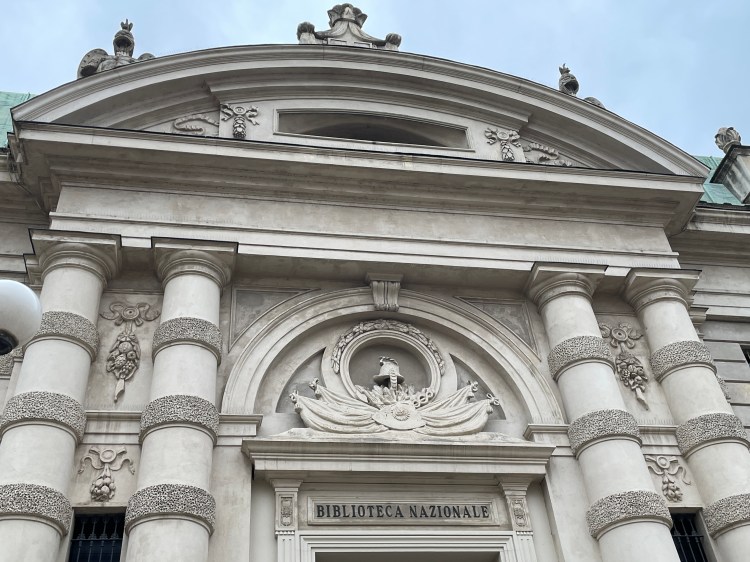
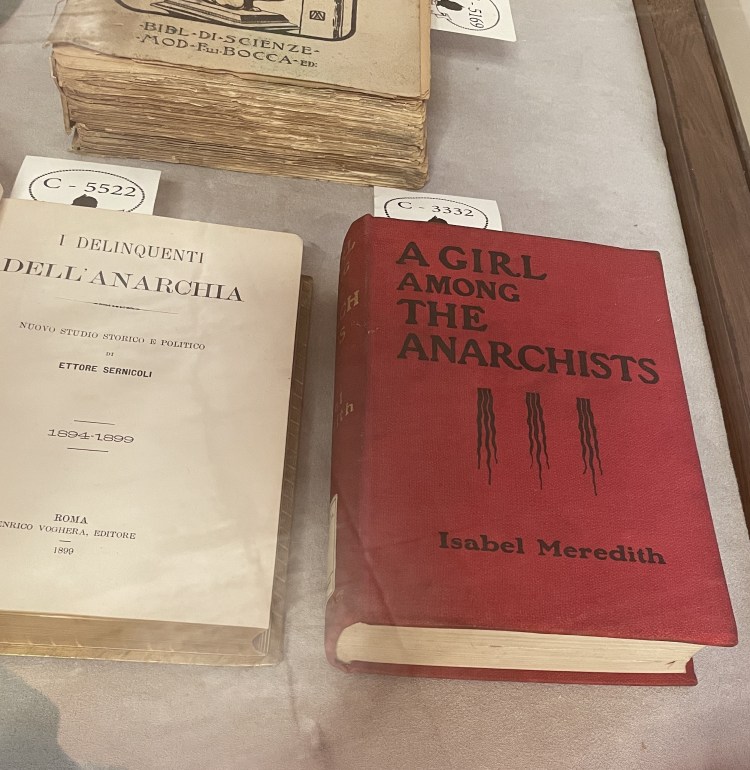
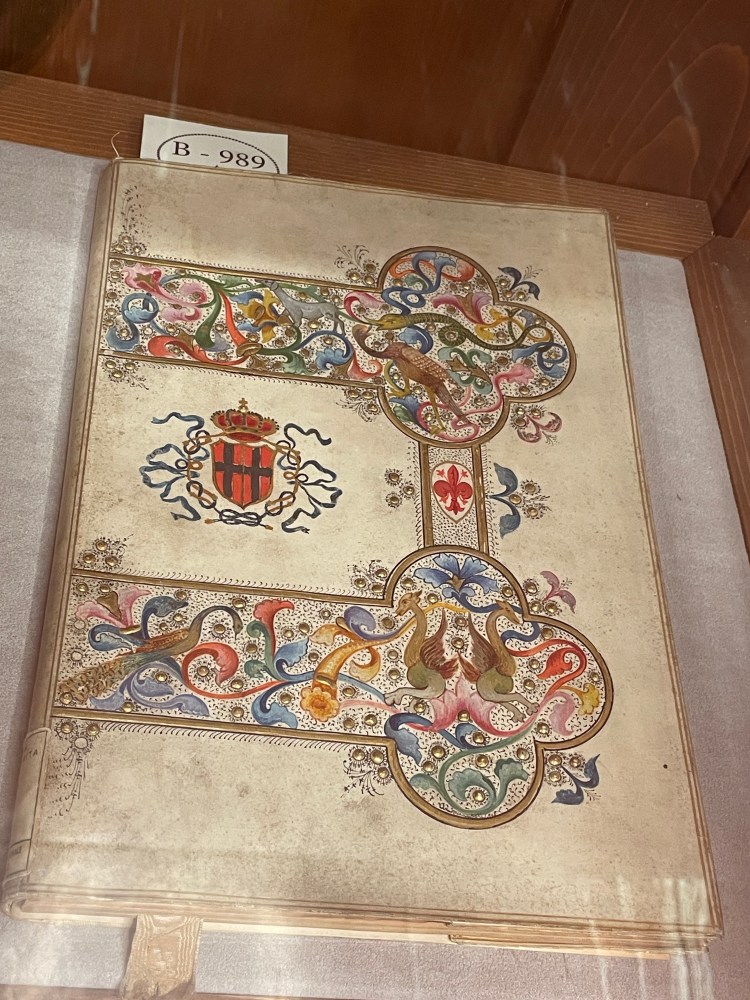
Across the piazza, we also visited the Biblioteca Nazionale Universitaria di Torino – one of Italy’s main public libraries established in 1720. There, we viewed an exhibit of books owned by Queen Margherita of Savoy. Her collection consists of 13,560 volumes, though “only” 120 of them were on display, presented thematically. What a fascinating, albeit brief, look into the Queen’s personal interests.
Back in Vigevano (south of Milano), I undertook research at the Archivio Storico located in Palazzo Merula. Constructed in the early 17th century, the building was originally a cloistered convent for Dominican nuns; throughout the 19th and mid-20th centuries, it served as an orphanage and asylum. Eventually, the municipal administration acquired the property and restored the building (1996-2002) which now serves as a home to various cultural institutions, including the archives.
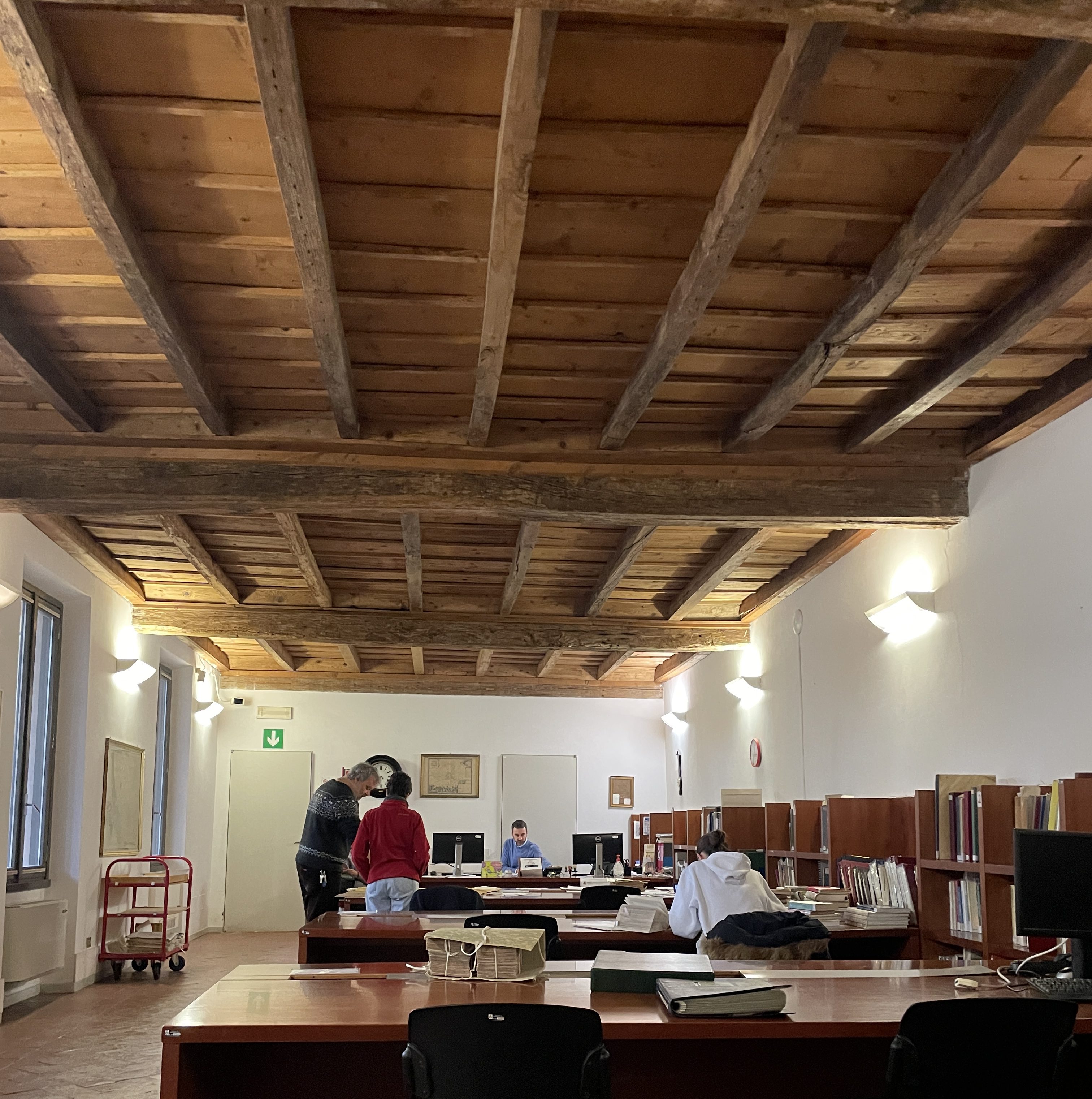
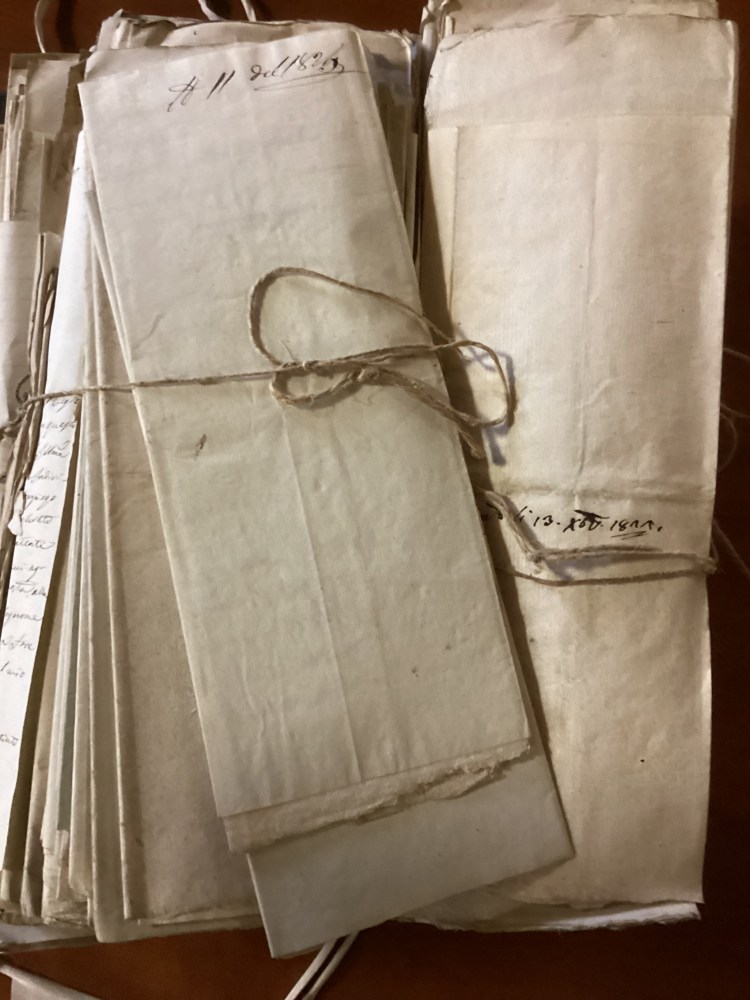
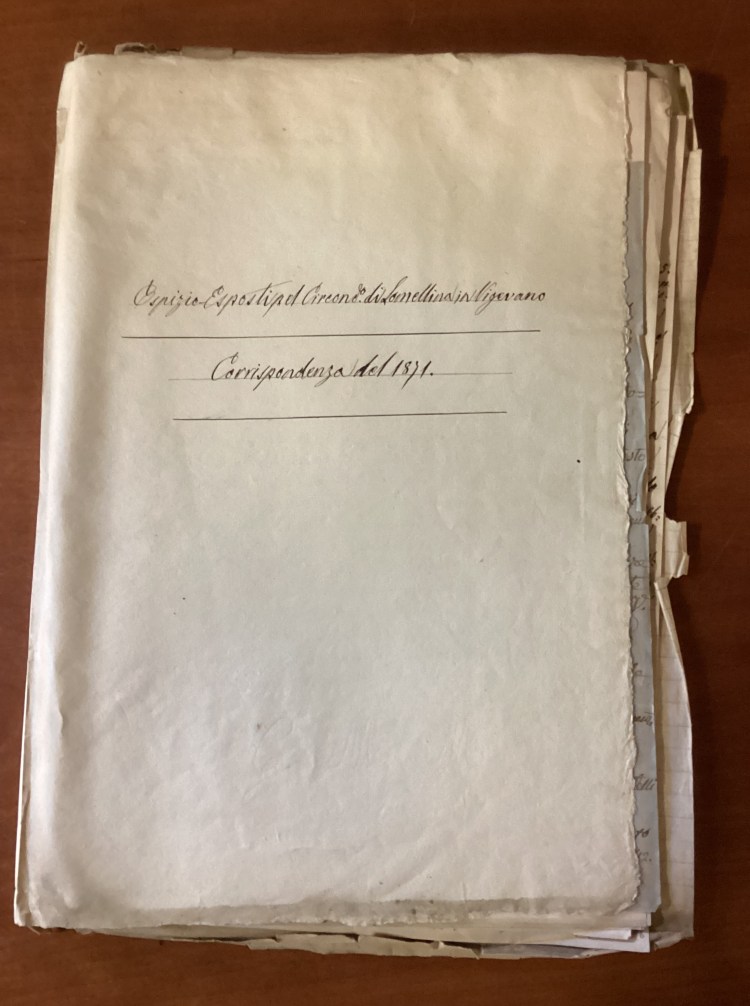
My research task was investigating the city’s care and management of abandoned infants. While my previous experience in Bologna/Imola had given me insight into various types of records, I was surprised to discover a different sort of record keeping in Vigevano. I was given Registro Generale degli Esposti – oversize ledgers that contain data on each infant (intake dates, date of birth if known, name, etc.), as well as “nutrice” (wet nurse) registers (name of the nurse, where she lived, how old the child was, and the health of the child). To complement these, packets of files organized by year and the registration number listed in the register peovided a wealth of information and can be used in combination with civil and parish records to flesh out a child’s story. What was most surprising to me was that some of the children were returned to parents who later came back to the orphanage to claim them. Paper files for these children were non-existent and had either been given to the families or destroyed after the children were no longer in the care of the orphanage.
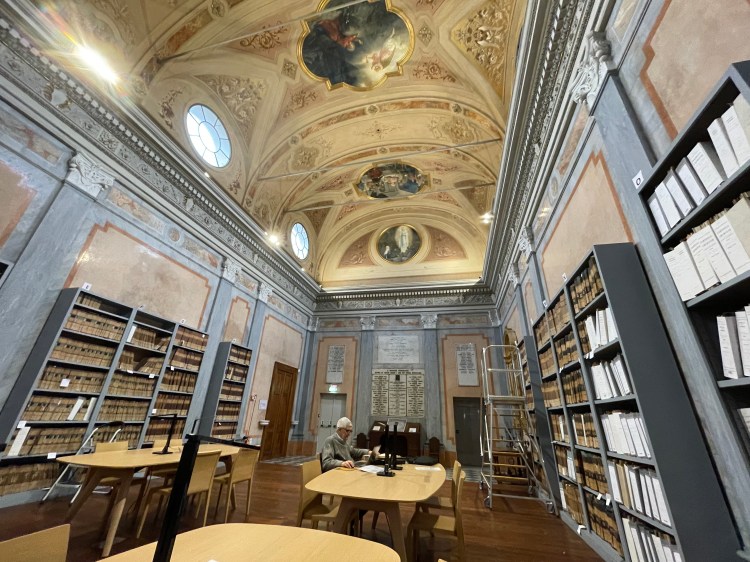
One final visit was on this trip was to the Archivio Storica Diocesano (below) described by researcher Elena Gissi as the most beautiful archives she has visited. She was not wrong. The reading room is like being in a cathedral and contains decades of baptismal registers lining the shelves. While I was only there a short time, I am certain that this is just the tip of the iceberg as the Diocesan Historical Archive has the task of “safeguarding, protecting and enhancing the historical-documentary heritage of the diocese.”
Perhaps you are interested in libraries, archives, and/or historical records. If so, consider visiting these places on your travels even if you do not intend to do research. If you can, engage with library and archival materials. Every record has a story but needs a storyteller. Maybe you will be the one to tell that story.
 Historica Research